
Speed, Trust, and User Experience in Mobile Identity Verification: SmartID SDK
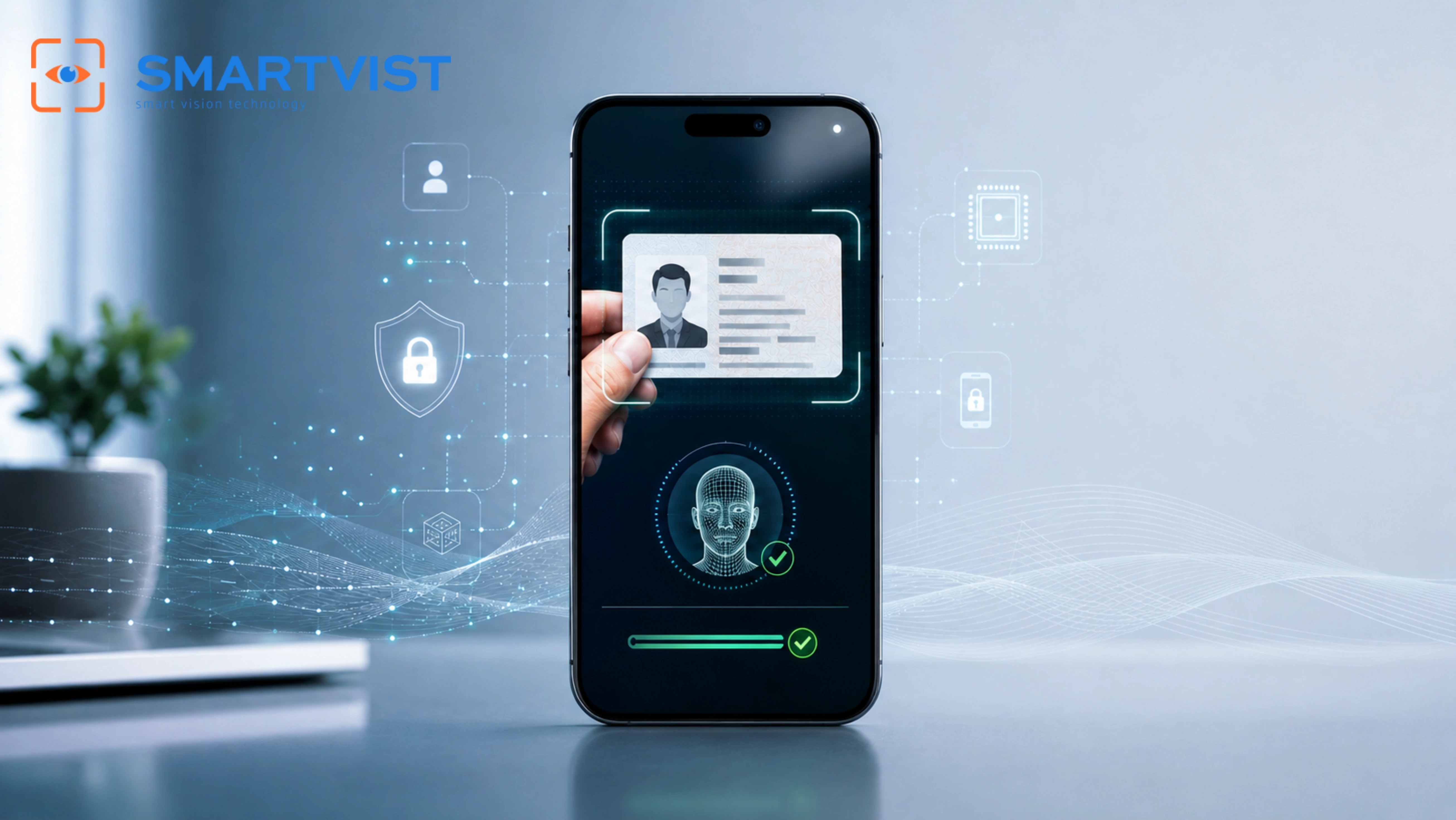
SmartID SDK combines mobile identity verification, OCR, NFC, liveness detection, face verification, and video calls in a single end-to-end digital onboarding experience with Android, iOS, Flutter, and React Native support.
Success in digital customer acquisition is no longer limited to moving identity verification steps into a mobile application. The real difference for institutions is making this process fast, secure, accurate, and as seamless as possible for the user.
SmartID SDK provides institutions with a powerful, flexible, and user-friendly digital onboarding infrastructure through Smartvist's mobile identity verification technology. With Android, iOS, Flutter, and React Native support, SmartID SDK can be integrated into existing mobile applications and brings OCR, NFC, liveness detection, face verification, and video calls into a single end-to-end platform.
AI on Mobile: AI processing on the mobile device
One of SmartID SDK's key differentiators is its AI on Mobile / Mobile Edge Computing approach. A significant part of image recognition and AI processing in the identity verification flow can be performed directly on the mobile device without moving every step to the server.
This architecture gives users a faster, smoother, lower-latency verification experience. For institutions, the process becomes more controlled, more performant, and more scalable.
In particular, the ability to perform steps such as reading both the front and back sides of an identity card, verifying visual elements on the document, and generating verification outputs directly on the mobile device differentiates SmartID SDK from many solutions on the market.
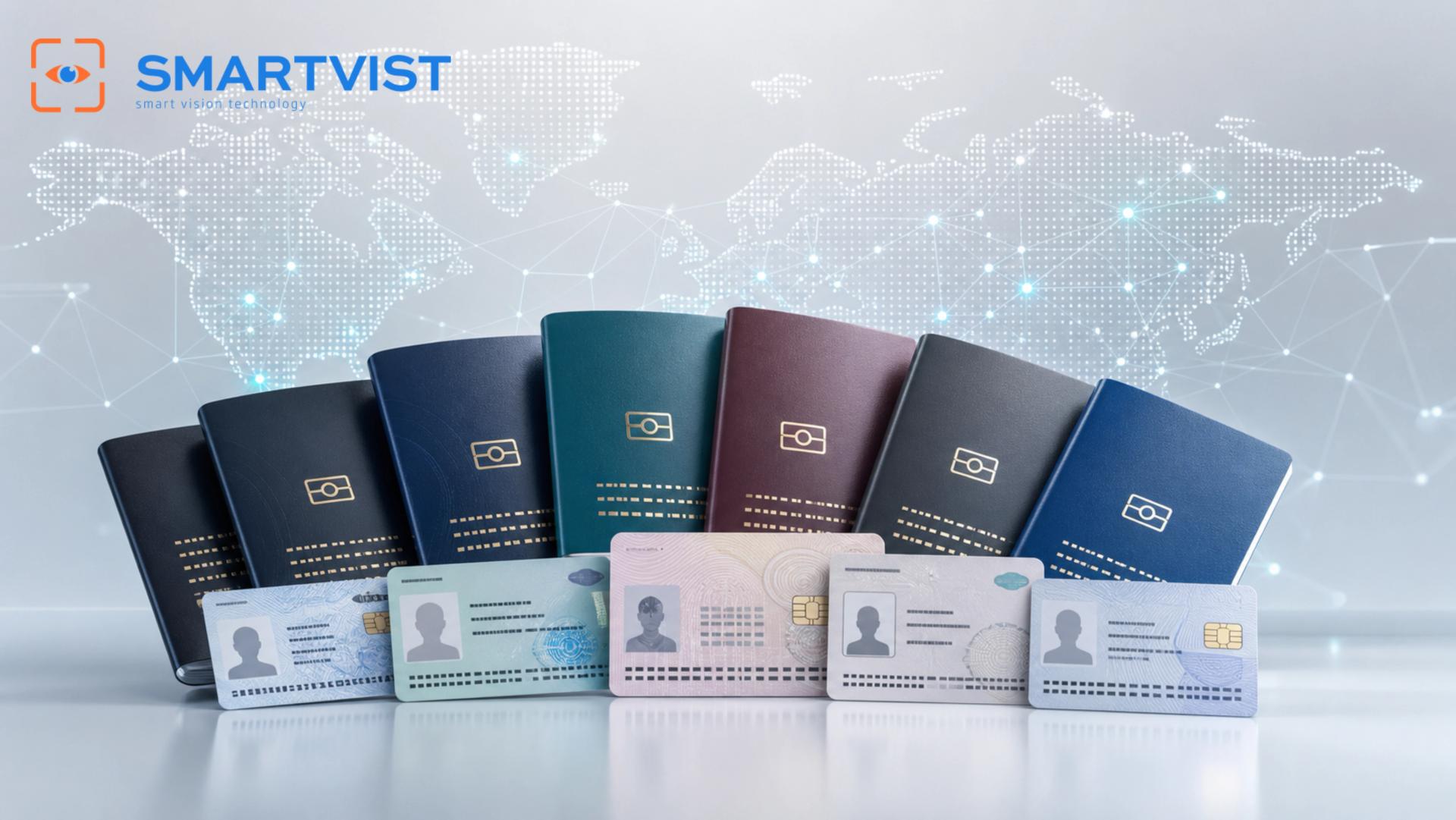
Identity and passport document support for 193 countries
SmartID SDK addresses not only local identity verification needs but also international digital onboarding scenarios. With support for identity and passport documents from 193 countries, it helps institutions deliver consistent, fast, and reliable verification experiences across different markets.
For ICAO Doc 9303 compliant TD1, TD2, and TD3 documents, MRZ reading, check digit validation, and data consistency checks are supported. This allows identity and passport data to be processed quickly while strengthening the reliability of the verification process.
High-speed OCR verification for identity cards and passports
SmartID SDK offers advanced OCR reading capabilities for Turkish ID cards, Turkish passports, and international identity documents. Information on the front and back of the document is read quickly, MRZ fields are checked, and check digit and consistency validations are performed. For the Turkish ID Card specifically, consistency checks can be performed between front-side, back-side, and barcode information.
SmartID SDK reduces waiting time during the application process by completing front-side and back-side identity document steps at high speed. This means higher completion rates and a better user experience in digital onboarding.
A custom-trained AI model for the Turkish ID card
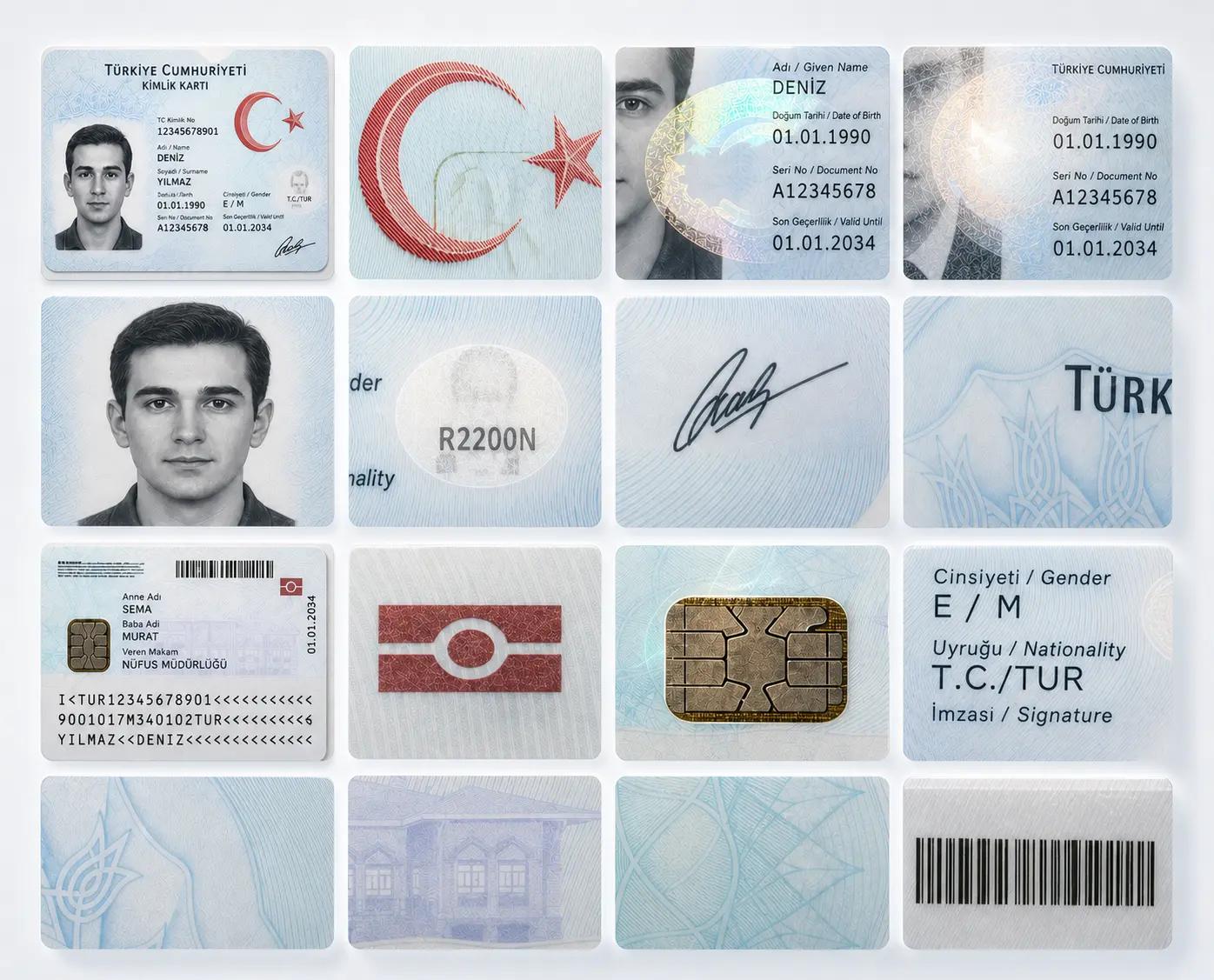
SmartID SDK uses a custom AI model developed by Smartvist to analyze visual security elements on the Turkish Republic ID Card. Sixteen different visual elements on the ID card can be checked with AI directly on the mobile device. This structure provides a stronger verification experience that is not limited to simply capturing a photo of the document, but also evaluates the security details on the document.
In addition, flash-supported hologram detection provides an extra layer of control against fraud attempts. These features are among SmartID SDK's strong security differentiators, developed especially around real needs encountered in the field.
Secure chip verification with NFC
One of the most critical steps in digital identity verification is securely reading and validating chip data from the identity document. SmartID SDK provides contactless chip reading through NFC and evaluates identity data on a stronger trust foundation.
Security checks such as passive authentication, active authentication, and chip authentication can be performed on NFC data. This strengthens data integrity, document reliability, and protection against cloning attempts.
SmartID SDK's NFC experience is not only security-focused; it is also designed to increase user success. Because NFC antenna positions on Android devices vary from model to model, users often may not know where to bring the identity document close. SmartID SDK makes this experience easier with guidance such as NFC antenna position indicators, audio prompts, vibration, and progress bars.
Thanks to this design, even users trying NFC reading on their phone for the first time can complete the process successfully at a high rate.
Face verification and liveness detection with algorithms that have passed NIST FRTE 1-1 Verification performance tests
SmartID SDK also provides face verification and liveness detection capabilities as an important step in the remote identity verification process to check whether the user is truly the holder of the identity document.
In face verification, algorithms that have passed and been listed in NIST FRTE 1-1 Verification performance tests are used. These algorithms compare the selfie image captured from the user with the photo on the identity document and the biometric photo read from the chip with high accuracy.
Both passive and active scenarios are supported in liveness detection. In active liveness, the user may be asked to smile, blink, or turn their head. In passive liveness, liveness detection is performed without requesting any action from the user. During this process, every kind of spoofing attack such as photos, screens, masks, deepfakes, and similar attempts is detected and blocked.
This structure helps increase security while keeping the user experience as simple and smooth as possible.
Video call infrastructure
One of SmartID SDK's strengths is that it includes video call infrastructure inside the SDK. With WebRTC-based video calls, the user can securely and continuously connect with an institution representative from the mobile application.
For institutions where regulation requires a video call with a representative, SmartID SDK supports this need as a natural part of the remote identity verification process instead of requiring a separate solution.
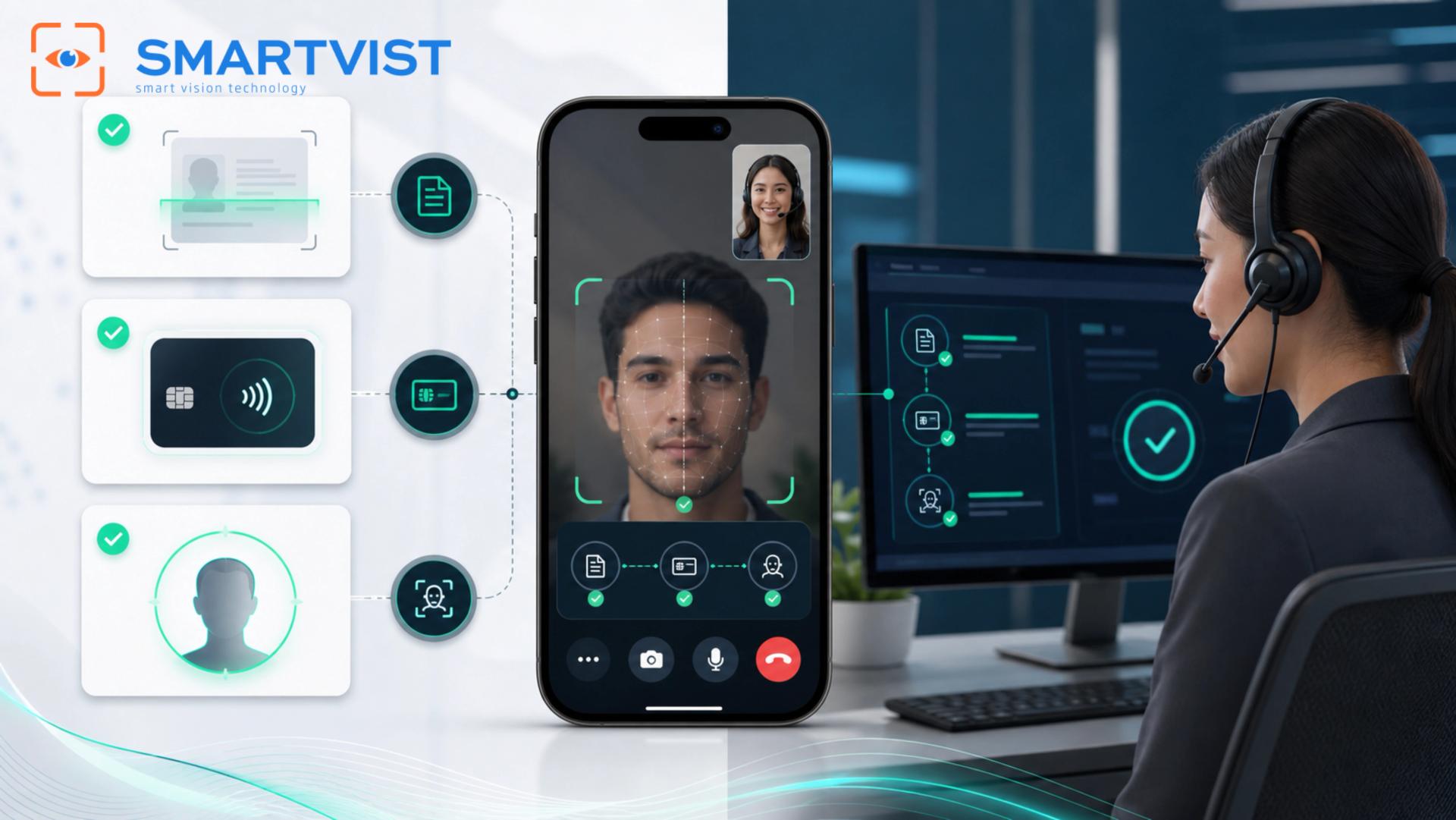
OCR, NFC, and face verification steps can be repeated during the call
One of the important features that makes SmartID SDK strong in the field and improves remote identity verification performance is that identity verification steps can be repeated with representative guidance during the video call.
If the user has trouble with OCR, NFC, or face verification steps in the initial self-service stage, failed steps can be repeated and completed during the video call with representative guidance.
Thanks to this feature, which improves the user experience, user drop-off decreases in the remote identity verification process, missing steps are completed with representative support, and customer acquisition rates increase in applications.
Multilingual and customizable user guidance
Explaining what the user should do at the right moment and in the right way directly affects success rates in identity verification. SmartID SDK supports multilingual written, audio, and visual guidance across the verification flow.
Clear guidance is provided to users in steps such as OCR, NFC, liveness detection, and face verification. Audio guidance is provided in cases such as errors, timeouts, or process start and end states.
Institutions can customize text styles, colors, visuals, and audio guidance according to their brand experience. This makes SmartID SDK not only a technical verification component, but also a natural part of the brand's mobile customer experience.
Remote-manageable and flexible architecture
SmartID SDK offers a flexible infrastructure that can adapt to different operational needs. Identity verification process, option, and calibration parameters can be configured remotely. Information obtained with the SDK during identity verification steps can be retrieved through the SDK API or backend servers via REST API.
Device and location data can be collected for security and fraud prevention purposes. The mobile device camera and light can be controlled remotely. Screen recordings of operations performed on mobile during identity verification can be captured.
These capabilities provide institutions not only with a strong identity verification experience, but also with valuable infrastructure for security, operational monitoring, reporting, and process improvement.
End-to-end digital onboarding with the SmartID product family
SmartID SDK forms the mobile application layer of Smartvist's remote identity verification product family. When used with SmartID Studio, institutions can access operational capabilities such as call center queue management, video call records, application reports, abandoned-flow analysis, blacklist management, and parameter management.
This structure gives institutions not just an SDK, but an end-to-end manageable and scalable digital identity verification ecosystem.
Conclusion
With on-device AI architecture, document support for 193 countries, high-speed OCR reading and verification, NFC chip reading and validation, Turkish ID card visual element checks, face verification with algorithms that have passed NIST FRTE 1-1 Verification performance tests, active/passive liveness detection, built-in video call infrastructure, and the ability to repeat operations during the call, SmartID SDK strengthens institutions' remote identity verification processes and offers a faster, secure, effective solution with a high-quality user experience.
Contact Us
Let's plan together how SmartID SDK can be integrated into your mobile identity verification and digital onboarding processes.