
From Physical Identity to Digital Trust: Global Standards and Smartvist
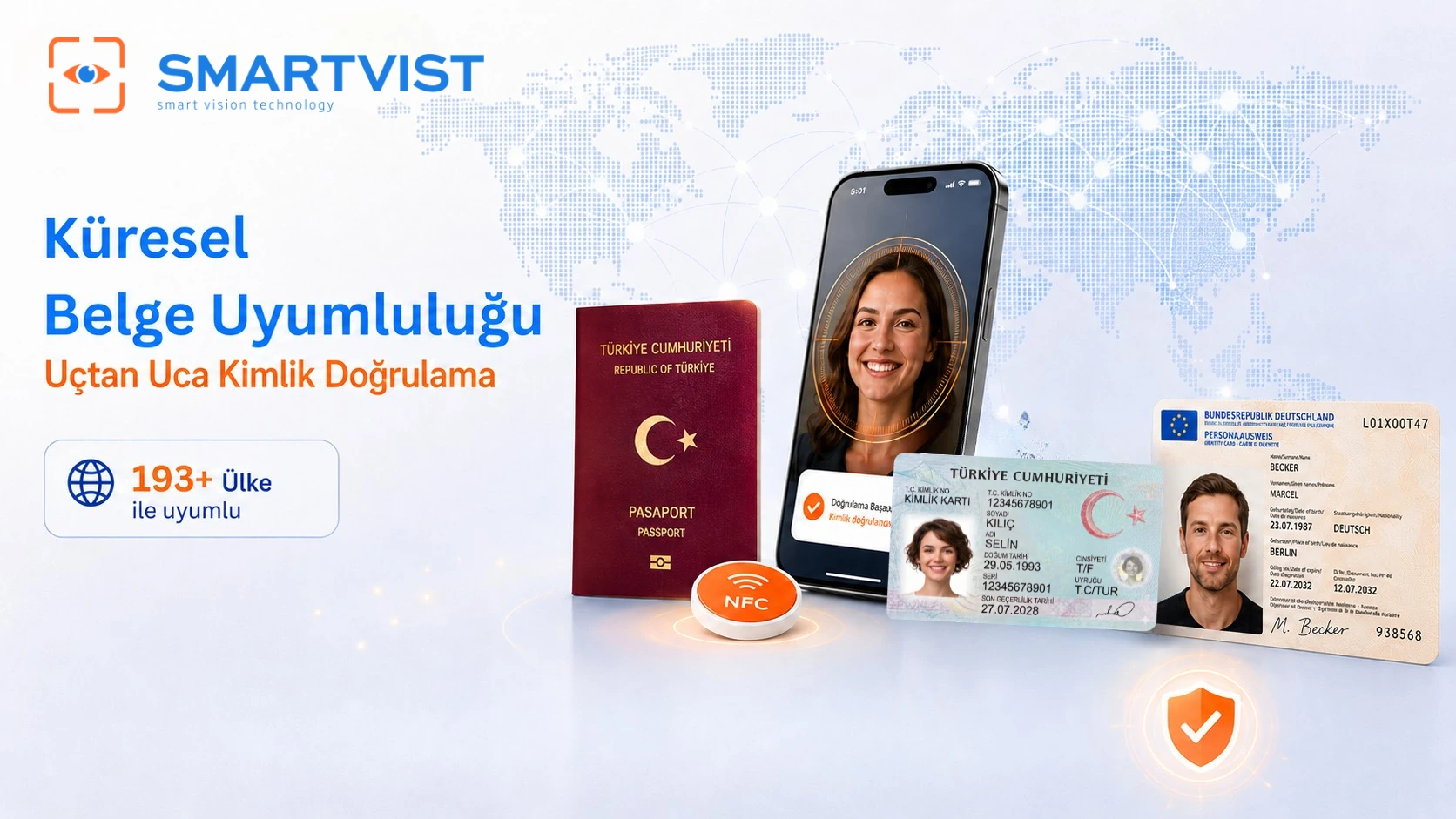
The reliability of an identity document is not measured only by the photo, name, or document number printed on it. Modern identity cards and passports are designed according to standards that include Machine Readable Zones, chip data, and visual security elements.
The reliability of an identity document is not measured only by the photo, name, or document number printed on it. Modern identity cards and passports are security objects designed according to international standards that define their physical dimensions, Machine Readable Zones (MRZ), chip data, and visual elements such as ghost images, holograms, and guilloche patterns. An identity document must be readable not only by institutions in the country where it was issued, but also by organizations in different countries. This need is the foundation of document standardization.
Smartvist's approach also places this standards-based structure at the center. SmartID provides a holistic digital identity verification infrastructure that can read identity and travel documents from 193 countries, work with international formats such as TD1, TD2, and TD3, and bring OCR, MRZ, NFC, biometric verification, and fraud checks together in a single verification flow.
In the following sections, we look at global standards in identity documents, what TD1, TD2, and TD3 formats mean, and how Smartvist positions alignment with these standards in terms of today's and tomorrow's digital identity verification needs.
Current Standards in Identity Documents
International interactions create the need to standardize identity documents. Smartvist treats these standards not only as a technical requirement, but as the foundation of reliable digital identity verification.
- ISO/IEC 7810 defines the physical dimensions of identity cards. Size families such as ID-1, ID-2, and ID-3 fall under this classification and determine the document's physical form and compatibility with reader systems.
- ICAO Doc 9303 defines international rules for machine-readable travel documents. It is the main reference for MRZ, passport, identity document, and travel document reading processes.
- MRZ means Machine Readable Zone. It enables data such as document number, date of birth, expiry date, nationality, and name to be read in a standardized format.
- NFC / contactless chip is the electronic data layer found in next-generation identity documents and passports. It enables chip data on the document to be read with a mobile device and verified cryptographically.
TD1, TD2, and TD3: Common Formats for Identity and Travel Documents
Identity and travel document formats define the physical structure, MRZ area, and intended use of different document types. However, details within this structure may vary from country to country. For this reason, a strong verification platform must be designed not only for a single document type, but also to support different countries and document formats. Smartvist's support for documents from 193 countries is a direct response to this global need.
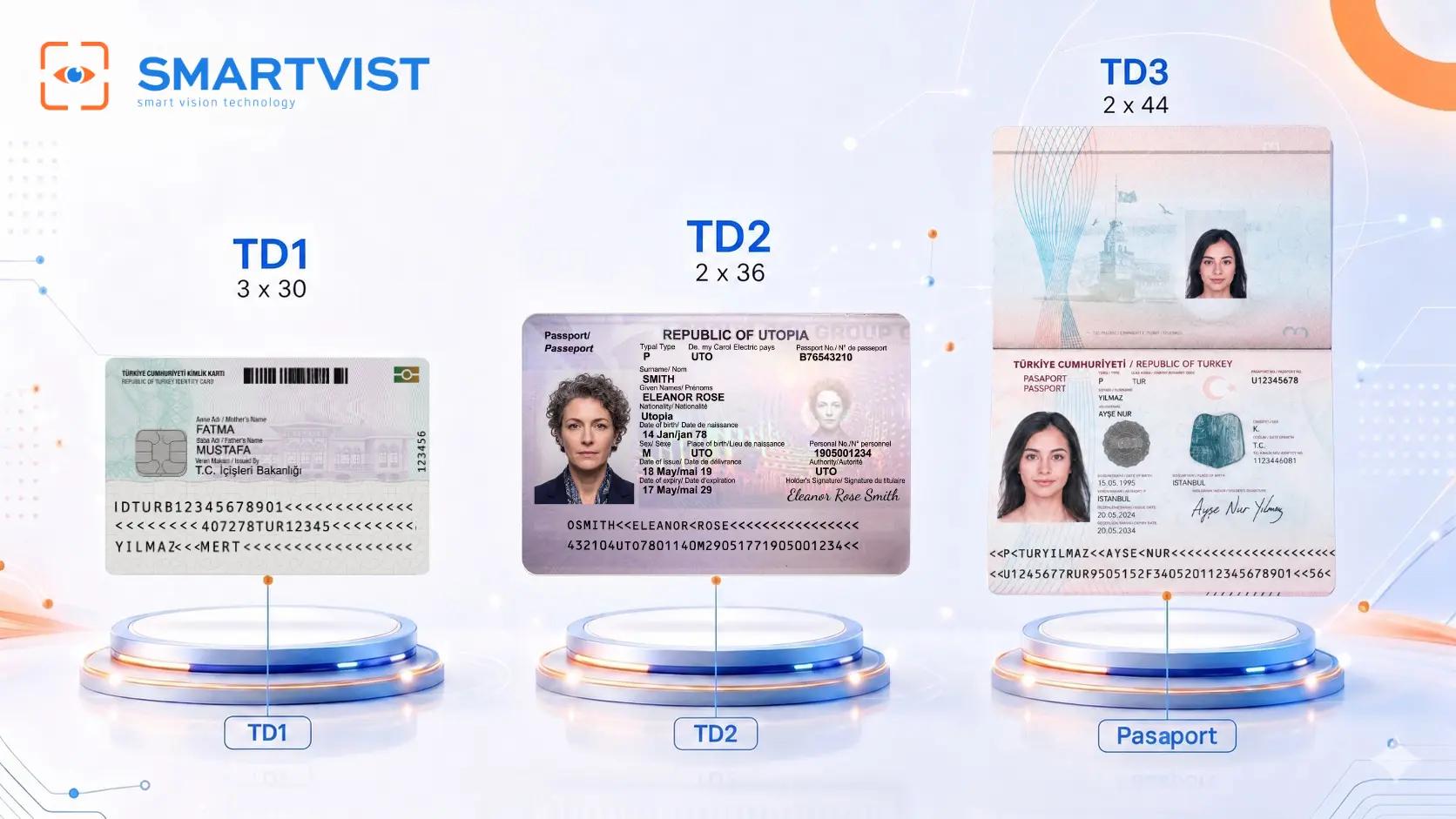
- TD1 is close to ID-1 size and is commonly seen in modern identity cards with a credit-card form factor. Its MRZ structure is 3 lines x 30 characters.
- TD2 is a larger official document format in ID-2 size. Its MRZ structure is 2 lines x 36 characters and it is used in some older identity documents, intermediate-size official documents, and some visa formats.
- TD3 is the passport data page format in ID-3 size. Its MRZ structure is 2 lines x 44 characters and it is used in standard passports.
MRZ, OCR, and Check Digits: The Foundation of Reliable Reading
MRZ is the machine-readable section of an identity document. OCR technology converts the characters in this area into digital data, while the system parses fields such as document number, date of birth, expiry date, nationality, and name in a standard format.
Unlike many digital identity verification solutions, Smartvist does not use the MRZ only for data extraction. Check digits within the MRZ are also included in the verification process. Fields such as document number, date of birth, or expiry date read by OCR are checked for structural consistency.
Smartvist also treats visual security and data elements on the identity document as an active part of the verification process. SmartID can recognize and include critical visual areas on the document, such as holograms, guilloche patterns, hidden images, MLI / CLI variable laser images, and ghost photos, in the verification process.
With these capabilities, SmartID treats MRZ and OCR data not as a standalone reading output, but as a multi-layered trust mechanism that works together with visual document analysis, NFC chip information, biometric verification, and fraud checks.
NFC: Moving from Physical Document to Digital Trust
In many next-generation identity cards and passports, the contactless chip securely stores biographic information about the document holder and, in many cases, biometric data such as the face image. Thanks to NFC capabilities on mobile devices, this chip becomes part of the remote verification process. The user only needs to bring the identity document close to the phone, adding a more reliable layer for proving identity in a digital environment.
Smartvist sees NFC in digital identity verification not as an endpoint, but as a bridge from physical identity to the digital identity technologies led by the European Union.
European eID and EUDI Wallet: The Next Stage of Digital Identity
The future of digital identity verification goes beyond reading physical documents with mobile devices. The European Union's eID and EUDI Wallet initiatives show that identity will become more portable, more user-controlled, and more interoperable.
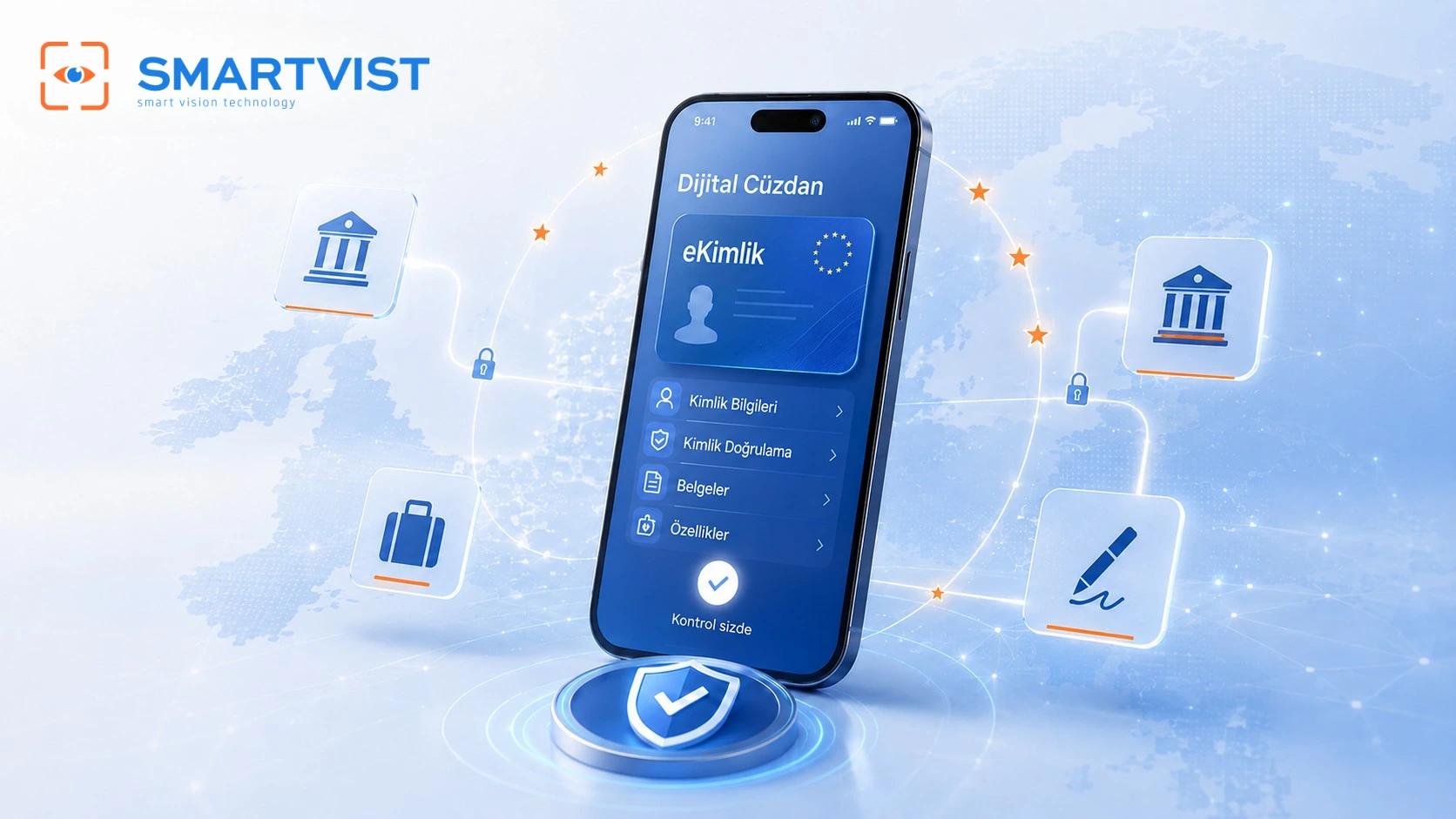
In this approach, users will be able to securely store and share their identity data, attributes such as driving licenses, education credentials, or financial documents through digital wallets. Institutions will be able to deliver safer services using verifiable, standards-compliant digital identity information.
Today's NFC-enabled identity verification processes are an important preparation area for this future transition. NFC carries trusted data from a government-issued physical document into the digital process. While Smartvist addresses today's requirements, it also closely follows developments around eID, EUDI Wallet, and similar future standards, and continues its R&D efforts in this field.
From Standards to Operational Trust with SmartID
Reading identity document standards correctly is only the technical starting point of the digital verification process. The real value is turning these standards into a fast, reliable, and manageable verification experience for institutions.
Smartvist interprets data from different countries and different document types within a single verification flow. Information on the document, MRZ data, electronic records read from the chip, and biometric checks are evaluated together to provide institutions with a more consistent risk analysis.
Smartvist's document support for 193 countries represents more than a technical feature; it is a trust infrastructure that can operate at global scale. Institutions can deliver a scalable and reliable identity verification experience based on the same standards across different markets and user profiles through the Smartvist infrastructure.
Digital identity will be used in more areas in the future. Whether opening a bank account, completing an insurance transaction, accessing a public service, signing a contract, or connecting to a cross-border digital service, reliable identity verification will remain a fundamental need. In this transformation, Smartvist aims to provide institutions not only with a solution for today, but with a future-ready digital identity verification infrastructure.
Conclusion
Standards in identity and travel documents form the foundation of digital identity verification processes. When TD1, TD2, and TD3 document formats, MRZ structure, OCR reading capability, NFC chip verification, and biometric checks are considered together, a reliable verification experience requires much more than document reading.
SmartID combines document standardization, multi-layered security checks, and operational verification needs in a single flow, providing institutions with a globally usable, reliable, and manageable digital identity verification infrastructure.
Contact Us
Let's plan together how SmartID can be integrated into your institution's digital identity verification processes.